

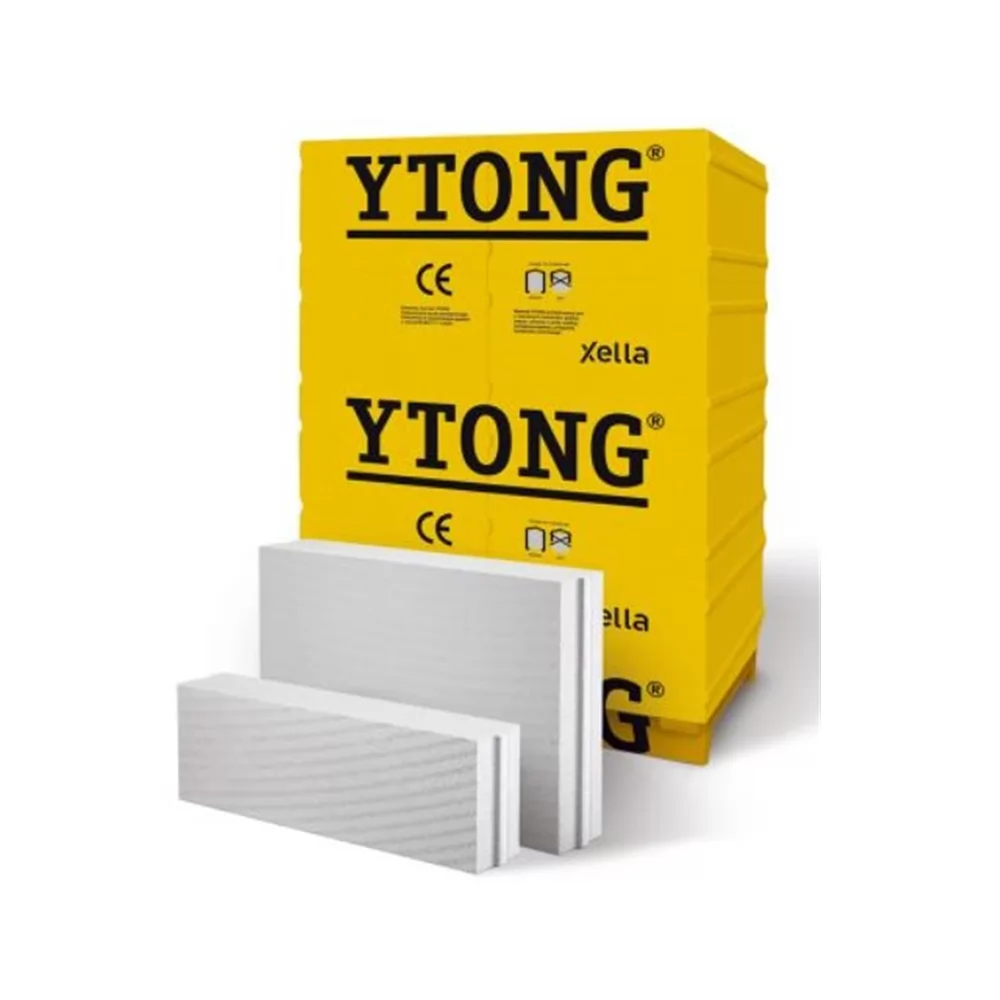
Ytong Autoclaved Aerated Concrete Block 10 cm 60x25 cm
Lightweight design offers fast, easy wall construction and excell
Ytong Autoclaved Aerated Concrete Block 10 cm: A Fusion of Lightweight and High Performance
Ytong Autoclaved Aerated Concrete Block 10 cm (60x25x10 cm) is a superior building material that combines the speed, efficiency, and comfort required by modern structures. Developed with Ytong's innovative production technology, these AAC blocks offer an ideal solution for applications such as interior partition walls, cladding walls, and utility shafts.
Its lightweight nature accelerates the construction process, reduces labor costs, and decreases static loads, enabling the construction of more economical and safer buildings. With its high thermal insulation value, it significantly contributes to energy efficiency, while also creating safe and comfortable living spaces with effective sound insulation and A1 class non-combustibility.
Thanks to its environmentally friendly production process and recyclable structure, Ytong AAC Block 10 cm is an indispensable part of sustainable construction. Its breathable structure maintains indoor air quality and regulates humidity levels. These long-lasting, durable, and easily applicable blocks continue to be the choice of professionals.
- Product Type: Autoclaved Aerated Concrete Block (AAC)
- Brand: Ytong
- Dimensions (LxHxW): 600 mm x 250 mm x 100 mm
- Volume (Per Block): 0.015 m³
- Dry Unit Weight (Density Class): D4.0 (375-425 kg/m³)
- Declared Thermal Conductivity (λ10,dry): ≤ 0.11 W/mK
- Compressive Strength: ≥ 2.5 N/mm²
- Fire Resistance Class: A1 class non-combustible building material (TS EN 13501-1)
- Sound Insulation Value: Varies depending on application and plaster type, but offers inherent sound insulation properties.
- Water Vapor Diffusion Resistance Factor (µ): 5/10
- Block Weight (Average): ~6 kg/piece (for D4.0)
- Blocks Required per 1 m² Wall Area: ~6.67 pieces
- Interior Partition Walls: Fast and effective partition wall solutions in offices, residences, hotels, and commercial areas.
- Cladding Walls: Supplementary application to enhance the thermal and sound insulation performance of existing walls.
- Utility Shafts: For constructing shafts where electrical, water, and ventilation systems pass.
- Fire Walls: In areas requiring high fire safety due to its excellent fire resistance.
- Sound Insulation Walls: Effective solutions for spaces where noise control is desired.
- Architectural Details: Decorative applications and niches due to its lightweight and easy-to-shape properties.
- Renovation and Refurbishment Projects: Improving and reorganizing existing structures.
- Surface Preparation: The application surface must be clean, free of dust, dirt, oil, sound, and level. If necessary, the surface should be leveled.
- Starting Course: To establish a consistent base for the wall, the first course should be applied with specialized Ytong thin-bed mortar or cement-based mortar, ensuring it is plumb and level.
- Mortar Mixture: Ytong thin-bed mortar should be mixed with clean water according to manufacturer instructions until a homogeneous consistency is achieved. The mortar is applied in a thin layer.
- Block Placement: After the mortar is spread, Ytong blocks are placed with or without joints (if their surfaces are specifically planed for adhesive mortar). Blocks are pressed firmly together and gently tapped with a rubber mallet to ensure full seating. A mortar thickness of maximum 2-3 mm between blocks is aimed for.
- Vertical Joints: Specialized Ytong thin-bed mortar should also be used for vertical joints. In tongue-and-groove systems that interlock blocks, the need for vertical mortar may decrease, but it is still recommended for complete sealing.
- Cutting and Shaping: Ytong blocks can be easily cut and shaped with special hand saws or electric saws. This provides a great advantage for utility passages and special forms.
- Wall Leveling: The wall's straightness should be checked with a spirit level every two or three courses and ensured using a plumb line in the vertical direction.
- Finishing: After the wall construction is complete, the surface can be shaved if necessary to prepare it for plaster or other coating materials.
- Storage: Ytong blocks should be stored on pallets on a flat surface, protected from direct sunlight and rain. They must be protected from moisture.
- Handling: Care should be taken not to drop or impact the blocks during transport. Be careful not to damage corners and edges.
- Mortar Use: Only special thin-bed mortars recommended by Ytong should be used for the application. The use of different mortars can negatively affect wall performance and lead to cracks.
- Application Temperature: It is important to apply the mortar within the temperature ranges specified by the manufacturer. Generally, +5°C to +30°C is ideal.
- Moisture Control: During and after application, especially during the drying phase, the wall must be protected from excessive moisture. Excessive moisture can affect the drying time and strength of the mortar.
- Personal Protective Equipment: Dust may be generated during block cutting and mortar preparation. The use of personal protective equipment such as masks, goggles, and gloves is recommended.
- Utility Channels: When opening utility channels, deep or wide cuts that jeopardize block integrity should be avoided. Appropriate Ytong channeling tools should be used.
- Structural Connections: Walls must be properly connected to the load-bearing system and other walls according to the project. Stainless steel fasteners should be preferred.