

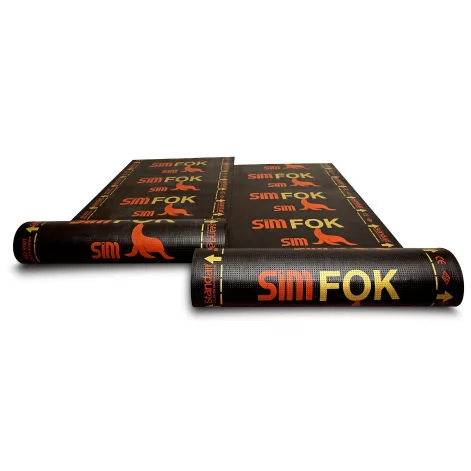
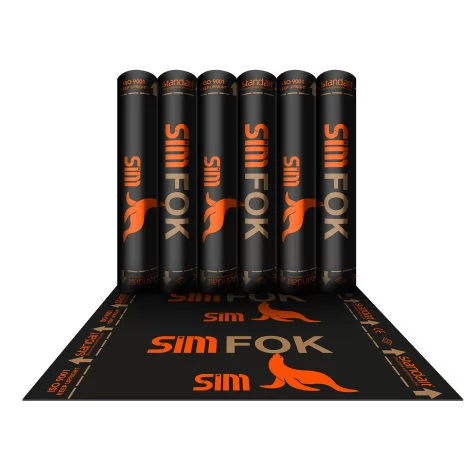
SİM Slate-Surfaced SBS-Modified Standard Waterproofing Membrane (-20°C)
Provides safe and durable waterproofing in cold climates
SİM Slate-Surfaced SBS-Modified Standard Waterproofing Membrane (-20°C)
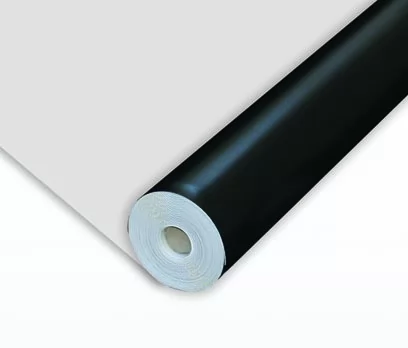
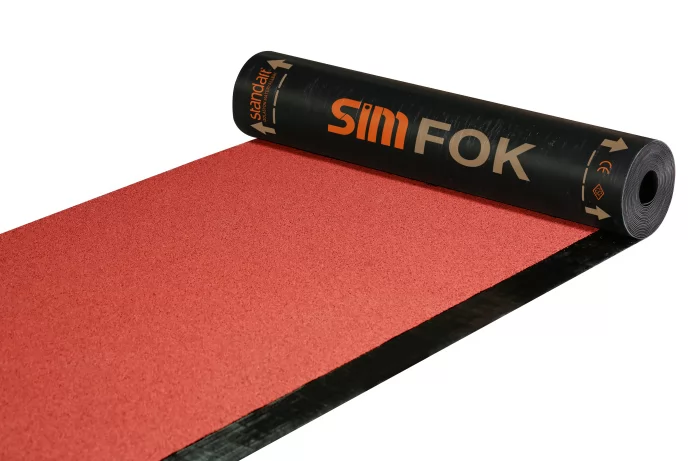
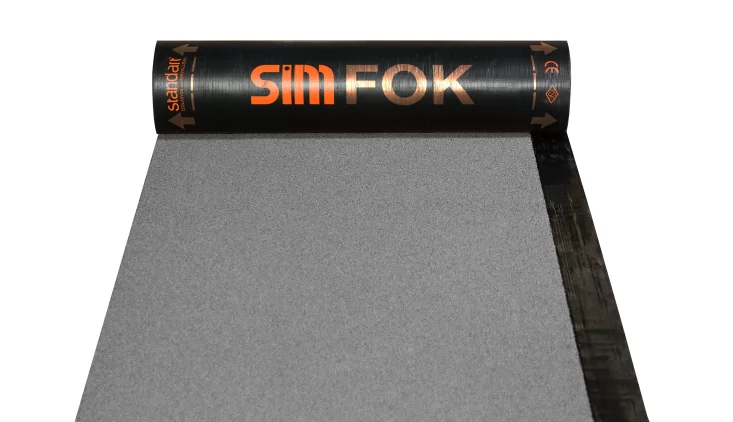
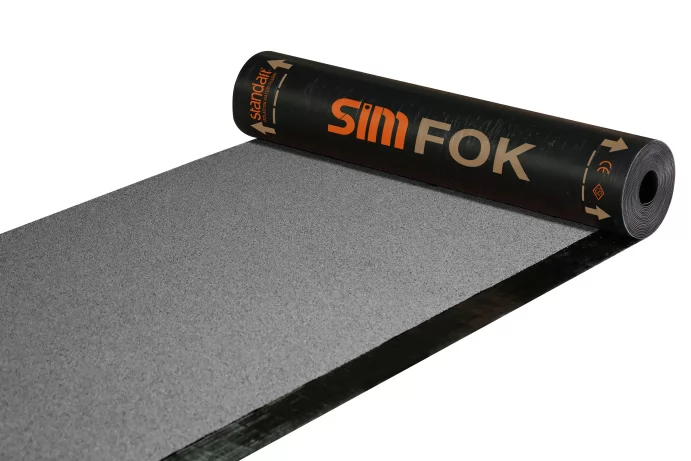
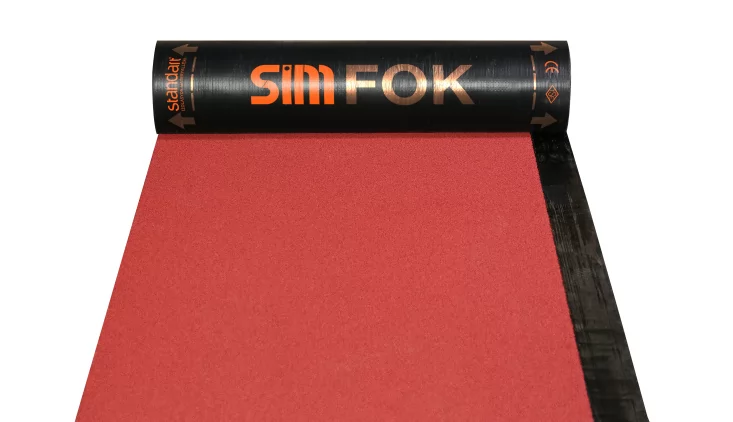
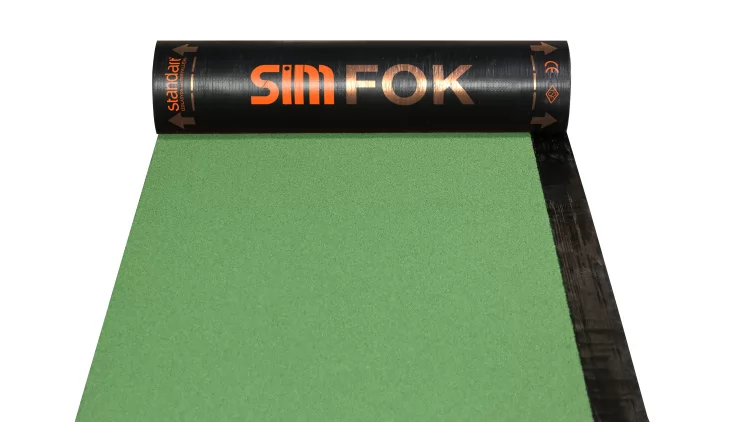
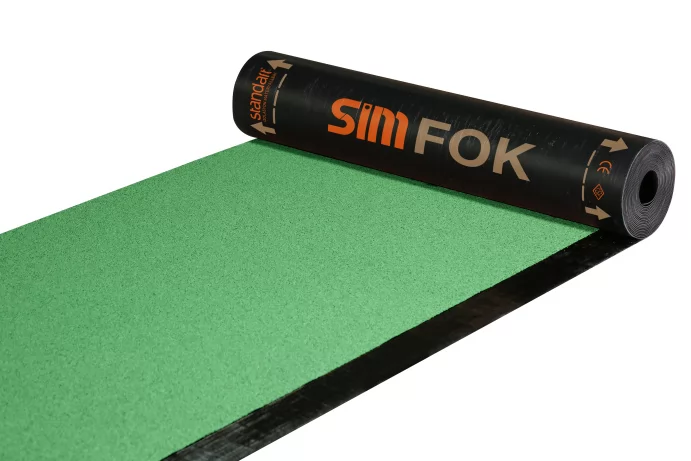
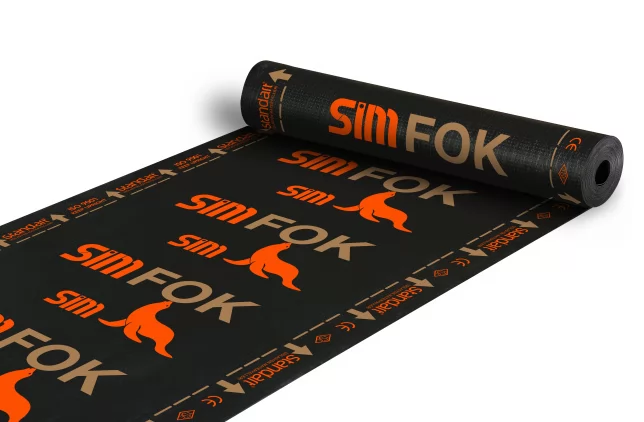
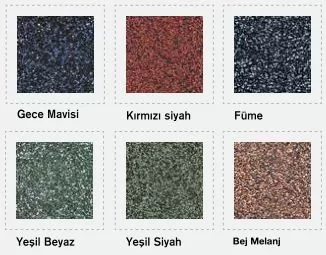
SİM Slate-Surfaced Membranes are elastomeric bituminous waterproofing sheets developed for cold climate conditions, with one surface coated with colored mineral (slate) and the other surface reinforced with a polyethylene film.
In the product, thermoplastic resin Styrene Butadiene Styrene (S.B.S.) additive is used to enhance the durability of the bitumen. To provide mechanical strength and resistance to structural movements, Fiberglass mat or Polyester felt is preferred as reinforcement.
SİM Slate-Surfaced SBS-Modified Standard Membrane – General Properties
-
Waterproofing membranes with a wide range of applications, delivering high performance under different climatic conditions.
-
Provides precise and reliable waterproofing thanks to its high water impermeability.
-
Membranes with one surface coated with colored mineral (slate) offer high performance as a final-layer material for all types of details on wooden, reinforced concrete, and metal roofs.
-
Adheres perfectly to the applied surface and maintains strong adhesion for a long time; stands out especially in foundation wall insulation applications.
-
Maintains flexibility even at temperatures below freezing in cold climate conditions; provides the required elasticity against high stresses and structural movements with transverse and longitudinal tensile strength.
-
Colored minerals protect the membrane from ultraviolet rays and protect the bitumen against melting at high temperatures and cracking at low temperatures, extending the service life of the membrane. Ideal for applications requiring UV resistance.
-
Economical and durable; when applied correctly, ensures safe use throughout the building’s lifetime.
-
Offers practical application; can be applied quickly with a torch flame and easily shaped to desired dimensions using special cutting knives.
Technical Properties
-
Cold Flexibility: -20 °C
-
Heat Resistance (Minimum): 100 °C
-
Breaking Point (Fraass): -35 °C
Areas of Use – SİM Slate-Surfaced SBS-Modified Membrane
-
On wooden, reinforced concrete, and metal roofs
-
On non-accessible terraces and garden roofs
-
On domed and vaulted roofs
-
On gazebos and pergolas
-
On garden sheds and canopies
-
In demanding details such as chimney bases, parapet upturns, roof gutters, concealed gutters, and expansion joints
SİM Slate-Surfaced Membranes can be safely used as a final-layer covering material in many details in addition to the areas listed above, offering both economical and aesthetic solutions.
Packaging, Storage, and Application – SİM Slate-Surfaced SBS-Modified Membrane
Packaging
-
Membranes with thicknesses of 3.5 mm and 4.5 mm are produced in rolls with a width of 1 m and a length of 10 m.
-
Each pallet contains 23 rolls.
Storage
-
Bituminous membranes should be stored in an upright position in covered and ventilated areas.
-
Pallets should be placed in a single layer and must not be stacked.
-
Products must be protected from ultraviolet rays and sudden temperature changes.
Application
-
Waterproofing applications should be carried out at temperatures of +5°C and above, on dry surfaces and in rain-free conditions.
-
Application surfaces must be smooth and clean, free from oil, diesel, or residues that may damage waterproofing.
-
Reinforced concrete surfaces should be primed with SİM Primer, and after drying, membranes should be applied using an appropriate bonding method.
-
All layers should be laid in the same direction; transverse joints of the first layer should be staggered, and the second layer should be centered over the joints of the first layer.
-
Transverse overlaps of 10 cm and longitudinal overlaps of 15 cm should be applied by heating with a torch flame.
Approvals / Standards
-
Complies with TS EN 13707 standard and bears CE marking.
SİM Slate-Surfaced Membrane – SP 40 AR
Test and Technical Values
| Property | Test Method | Declared Value | Unit | Tolerance |
|---|---|---|---|---|
| Visual Defects | EN 1850-1 | No visual defects | – | – |
| Length | EN 1848-1 | 10 | m | min (-0.03) |
| Width | EN 1848-1 | 1 | m | min (-0.02) |
| Thickness | EN 1849-1 | 3.5 | mm | ±0.2 |
| Waterproofness | EN 1928 (Method B, 60 kPa) | Passed | kPa | – |
| Flexibility at Low Temperature | EN 1109 | -20 | °C | min |
| Tensile Strength (Transverse) | EN 12311-1 | 600 | N/50 mm | -10% / +50% |
| Tensile Strength (Longitudinal) | EN 12311-1 | 800 | N/50 mm | -10% / +50% |
| Elongation at Break (Transverse) | EN 12311-1 | 35 | % | -5 / +20 |
| Elongation at Break (Longitudinal) | EN 12311-1 | 35 | % | -5 / +20 |
| Flow Resistance at Elevated Temperature | EN 1110 | 100 | °C | min |
| Straightness Deviation | EN 1848-1 | – | mm | Passed |
| Resistance to Static Load | EN 12730 | 15 | kg | min |
| Granule Adhesion | EN 12039 | 20 | % | 0–30 |
| Impact Resistance | EN 12691 (Method A) | 600 | mm | min |
| Tear Resistance (Transverse) | EN 12310-1 | 200 | N | ±50% |
| Tear Resistance (Longitudinal) | EN 12310-1 | 200 | N | ±50% |
| Joint Shear Resistance | EN 12317-1 | 500 | N/50 mm | ±50% |
| Reaction to Fire | EN 13501-1 | E | – | E |
| Hazardous Substances | – | None | – | – |
| Waterproofness After Stability Test | EN 1296 – EN 1928 | Passed | °C | Passed |